Our Impact
Our global health work at the University of Minnesota has created international partnerships that allow for meaningful collaboration – from workforce development in Uganda to gender-affirming care in Thailand.
Our education, research, and capacity-building efforts continue to impact countless communities while also shaping the minds of future global health researchers, practitioners, and leaders. Through our seed grants, travel awards, and mentorship programs, we are able to give faculty and students the opportunity to form valuable international collaborations. These partnerships are translating ideas into cutting-edge practice in the field at research sites on four continents.
Building on this foundation, the center today is at the forefront of a transition in global consciousness, recentering meaningful community engagement at the heart of our research and training efforts. Partnerships with local communities focus on building lasting relationships and nurturing the next generation of global health leaders.
Our Global Reach
We have worked or partnered in over 37 countries across the globe.

Global Health by the Numbers
We have impacted thousands of students, practitioners, and professionals through our education, research, and capacity programs.

Global Health Seed Grants
51 grants awarded since 2016 spanning 30+ countries

Global Engagement Grants
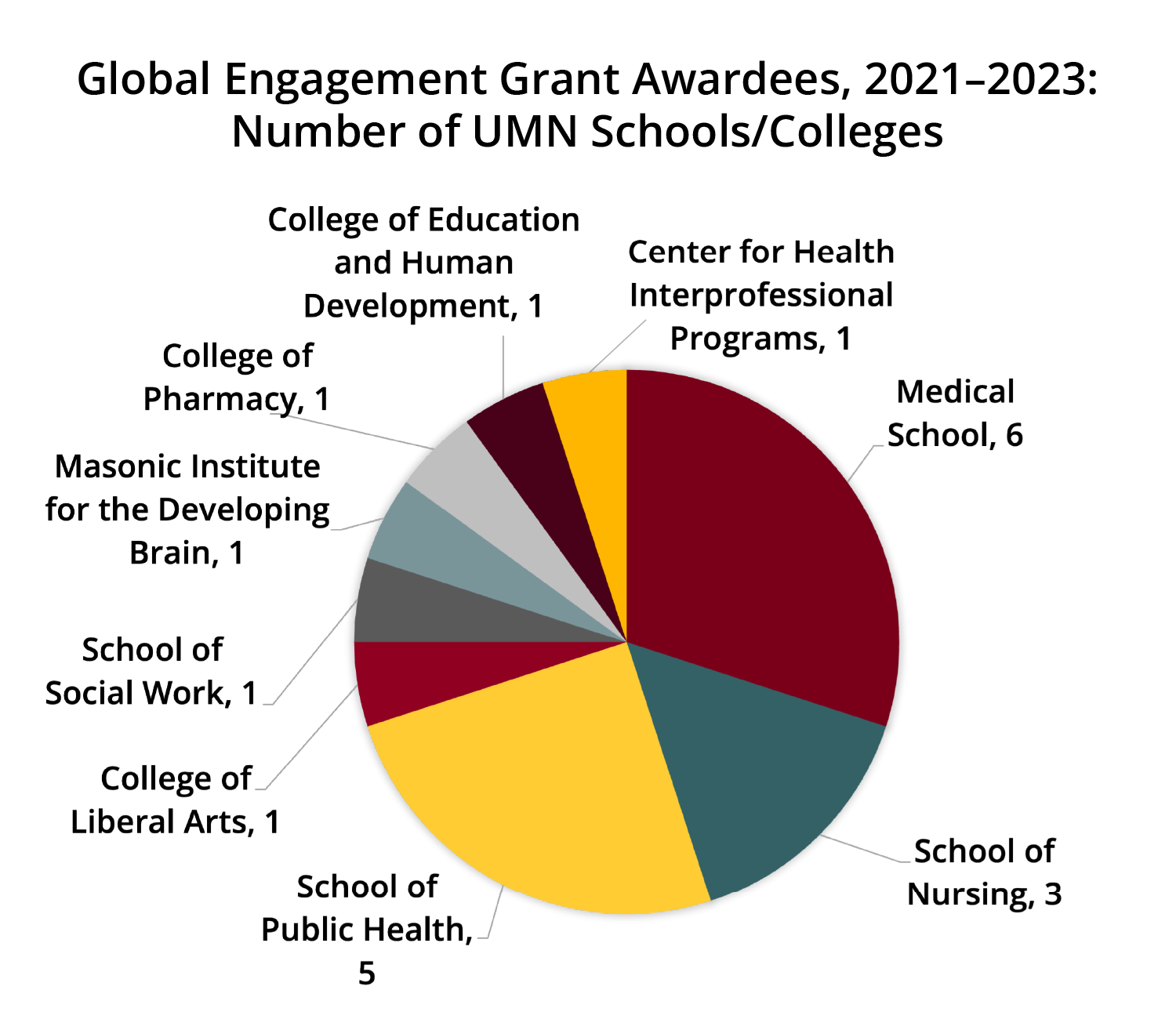
41 grants awarded across 12 different UMN schools

Fogarty Fellowships
61 trainees from University of Minnesota since 2012

Case Competition
Over 750 students from 18 UMN schools since 2016

Partnerships
100+ partner institutions in 37 partner countries

Global Health Courses
600+ students have taken CGHSR courses

Impact Area: Fostering the Next Generation of Global Health Leaders
Through our education and research programs, we're building connections and enhancing knowledge alongside future global health practitioners, professionals, and leaders.
See how –
- Global Medical Education and Research Program
- India: Global Health, Globalization & Leadership Course
- Global Health Case Competition
Global Medical Education and Research Program (GMER)
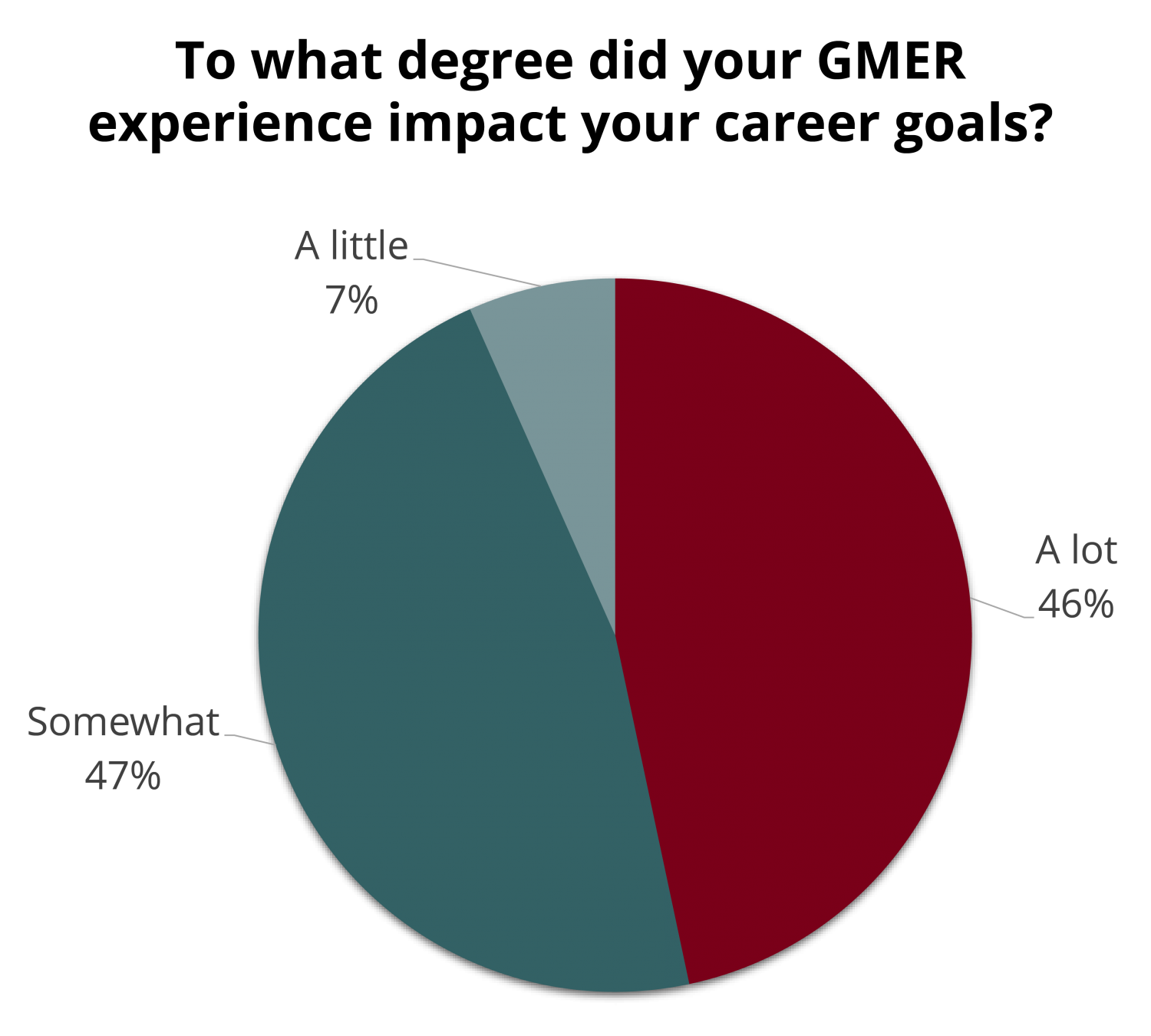
GMER promotes an exchange of international educational, research, and other scholarly opportunities for University of Minnesota medical students.
“This elective clarified a lot of my goals for a career in global health. I feel more confident that I have the vision and means for achieving these goals after taking this course." — 2023 GMER Participant
100% of students reported that their GMER rotation expanded their knowledge of how health care delivery varies around the world.
India: Global Health, Globalization & Leadership Course
In this two week course in Mysore, India, learners explore health, health care delivery, and social determinants in the context of globalization in India.
"The biggest takeaway for me was prioritizing community leadership when working in global health. Rather than going to another environment and enforcing your own culture, global health is about utilizing community-led partnerships to promote health equity." – Rachel Mansk, MPH ‘23
After participating in the course, 92% of students said they have interest in working in global health in the future.

Global Health Case Competition
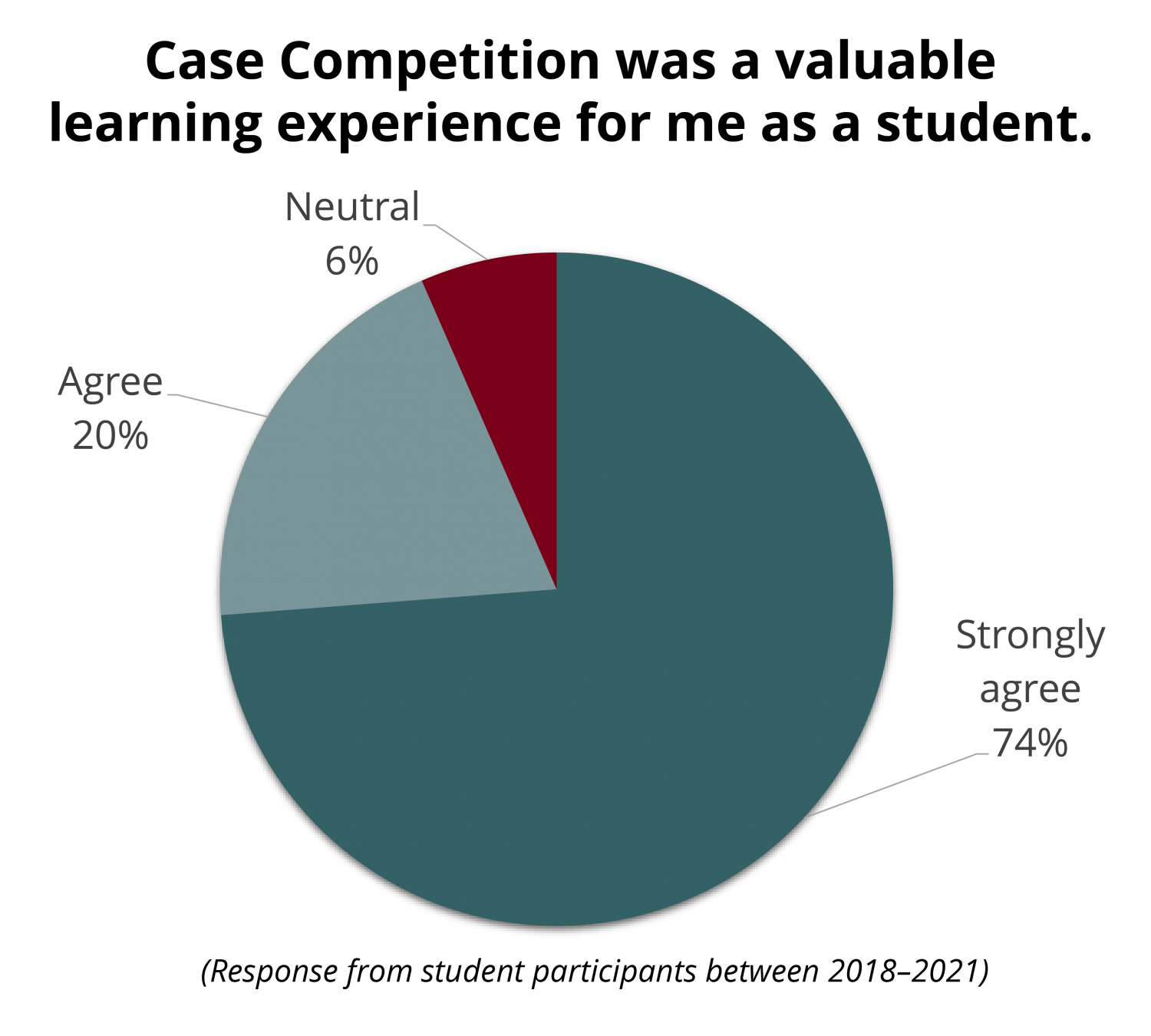
The Global Health Case Competition is an interprofessional learning opportunity for UMN students to work together to develop innovative solutions for twenty-first century global health issues.
“You’re taught to think a certain way in medical school, and I’m sure in other respective grad programs. And to see how different individuals from different schools think about a certain problem was really satisfying — it opened up my eyes to different ways to approach a question” – Ayush Shah, 2023 Global Health Case Competition Participant
91% of Case Competition participants said the event increased their interest in pursuing a career in global health.

Impact Area: Catalyzing Mutually-Beneficial Global Health Partnerships
We work with global partners to foster sustainable, bi-directional partnerships with the goal of building capacity for ensuring the health of their communities in the long term.
See How –
- Global Health Seed Grants
- Seed to R01 Accelerator Grants
- Global Engagement Grants
Global Health Seed Grants
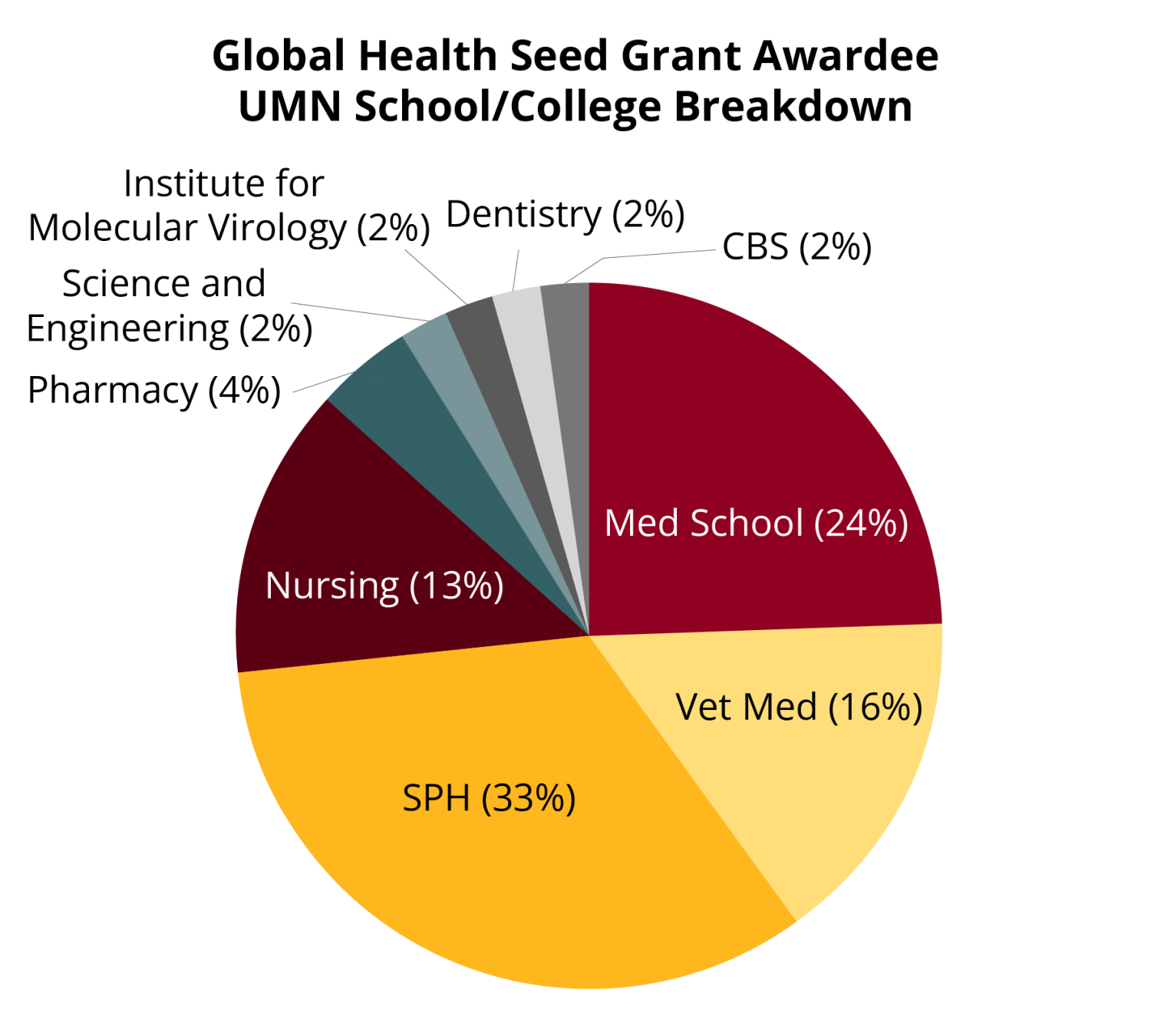
Our Global Health Seed Grant program fosters new interdisciplinary collaborations to advance global health research.
“The seed grant allowed us to get some research up and going quickly, while we were all very enthusiastic about the idea and ready to run with it. This was a great opportunity to build relationships with new collaborators at a new site.”
75% of Seed Grant recipient respondents anticipate proposing new collaborations with their study co-investigator in the future.
Seed to R01 Accelerator Grants
Our Seed to R01 Accelerator Grants support global health researchers who are working towards applying for an R01 award through the National Institutes of Health or equivalent research funding.
“CGHSR's accelerator grant program offers a unique opportunity for UMN researchers to advance promising ideas and enhance their competitiveness towards the objective of accessing federal and international funding. – Andres Perez, DVM, PhD | Director of the Center for Animal Health and Food Safety, Endowed Chair of Global Animal Health and Food Safety, College of Veterinary Medicine

Global Engagement Grants
Our Global Engagement Grants offer funding for innovative projects by faculty, researchers and students blend work in research, education and capacity building.
“This award will allow my colleagues from the National Malaria Control Program in Mozambique to visit our University and hold important meetings with our team here. This will give the opportunity for deeper engagement with our collaborative projects and develop future projects.” — Kelly Searle, PhD, 2023-24 Global Engagement Grant Recipient
CGHSR has awarded 41 Global Engagement Grants to faculty and staff from 12 different schools, colleges and centers across the Twin Cities and Duluth campuses.

Impact Area: Championing Social Responsibility in Global Health
We prioritize benefit to society and the environment at large throughout the cycle of our global health efforts—from planning and implementation to evaluating and disseminating outcomes.
See how –
- Advocacy for Global Health Partnerships
- Global Health in Local Contexts
Advocacy for Global Health Partnerships
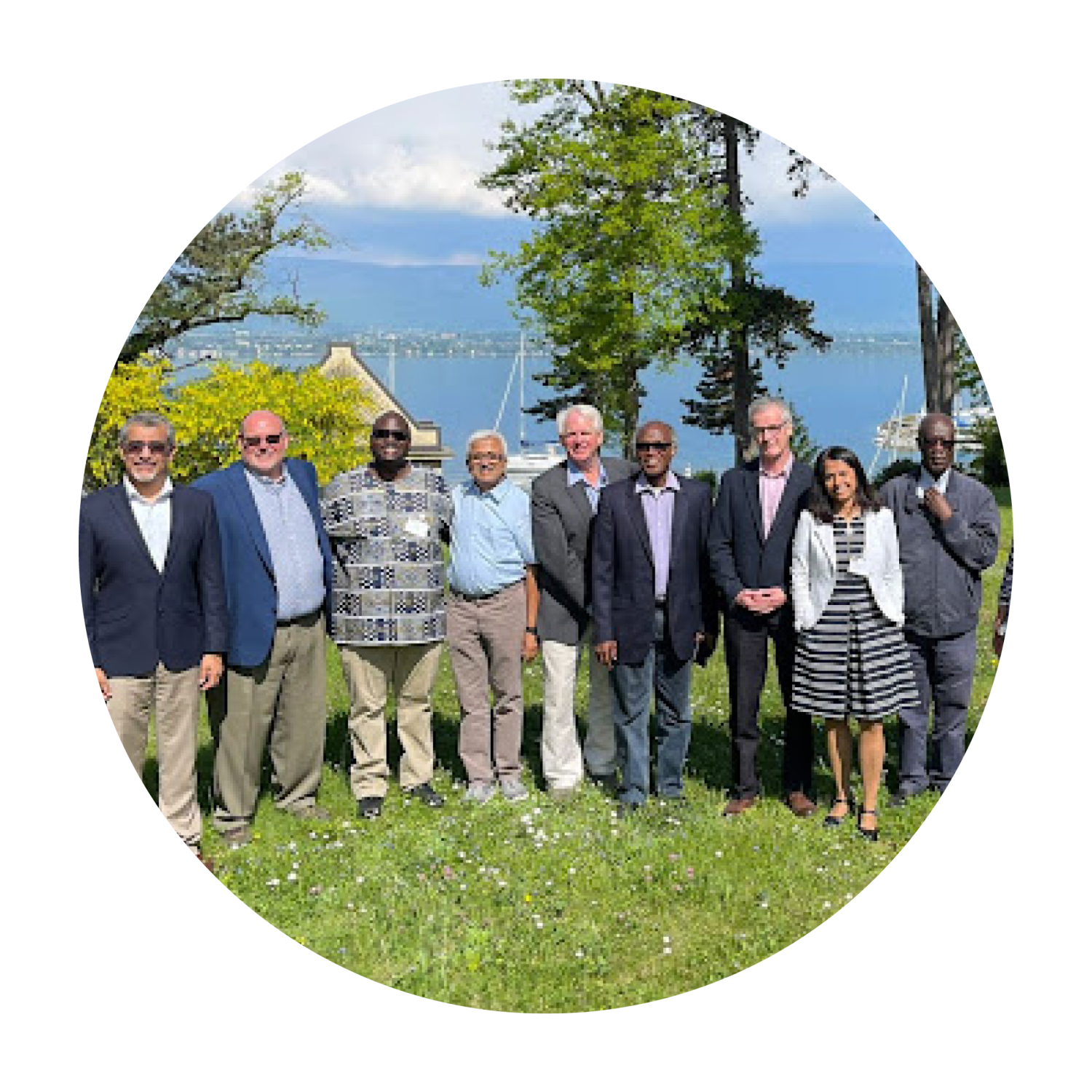
Advocacy for Global Health Partnerships (AGHP) is a coalition of global health practitioners committed to ensuring equity and bidirectionality in global health practice. CGHSR Executive Director Shailey Prasad is a co-founder of the group. AGHP has created the Brocher Declaration, a list of principles that outline recommendations for global health work.
More than 50 institutions have signed onto the Brocher Declaration.
Global Health in Local Contexts
Global Health in Local Contexts is an experiential course that immerses UMN students and health professionals in the study of health equity, the social determinants of health, and community-based healthcare.
“This course helped me grow emotionally and made me feel more connected to this place. It created the opportunity to form new connections with classmates from many different backgrounds, and with our incredible instructors. I am a better person who is better equipped to advocate for health justice after taking this course.” — 2023 Global Local Student
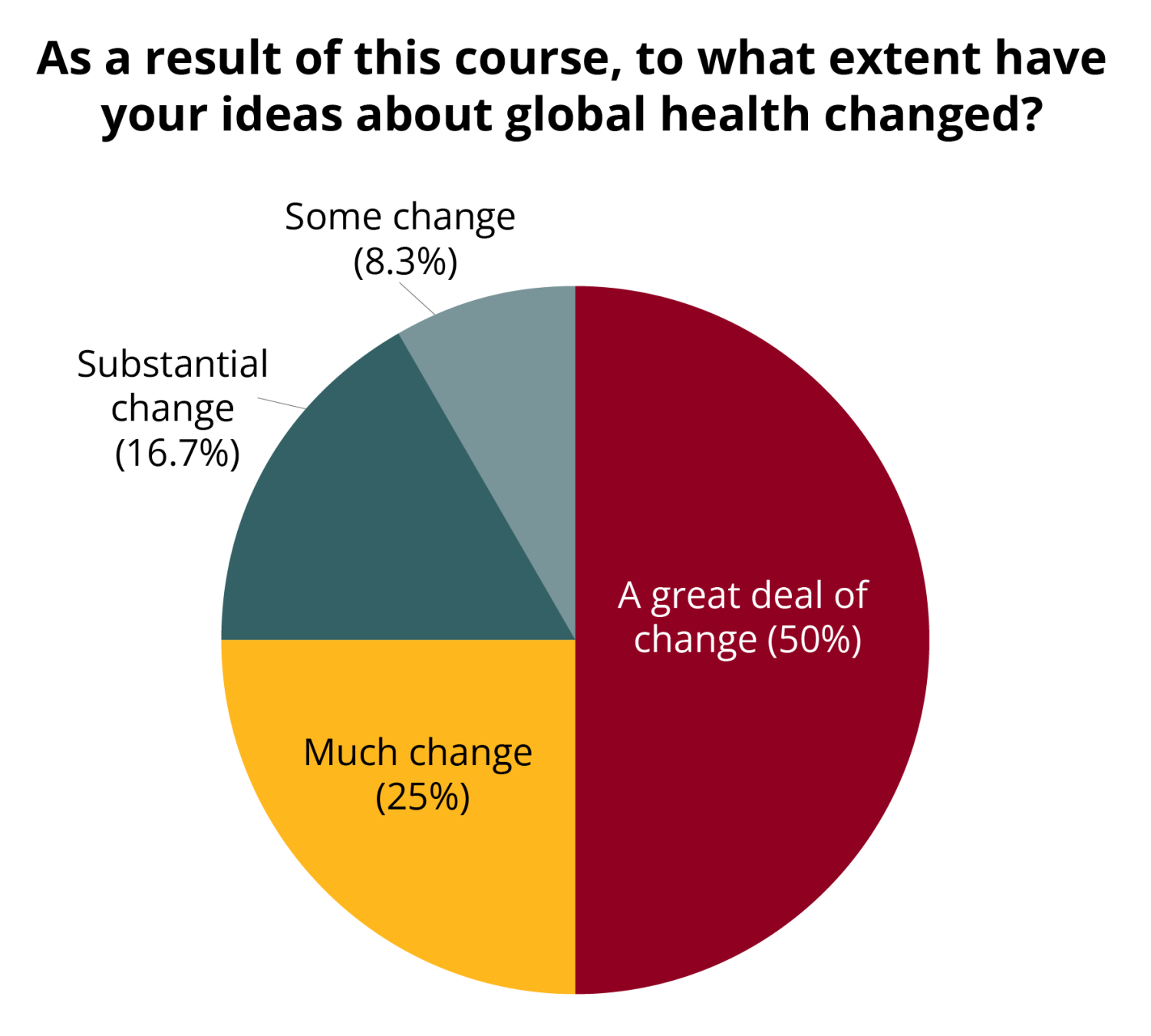
All students surveyed after the 2023 course said Global Health in Local Contexts had changed their ideas about global health.